Hospitality Furniture Trends 2027: What Designers Are Specifying Now
The global hospitality furniture market is projected to continue its steady expansion, moving from approximately $4.72 billion in 2025 toward $6.01 billion by 2031, at a compound annual growth rate (CAGR) of 4.11%. What is driving 2027 specification decisions is no longer aesthetics alone. Designers are now selecting furniture that performs across three criteria simultaneously: guest comfort, commercial durability, and brand differentiation.
Here is what the actual spec sheets are showing as the industry moves into 2027.
Trend 1: Are Earthy Tones and Natural Wood Still Replacing the Gray Palette?
Yes — and the shift has now become a specification standard rather than a passing preference.
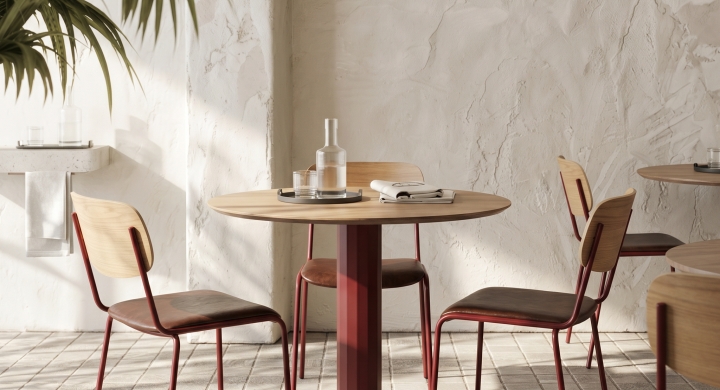
The industry-wide move away from cool grays and whites has reached most segments of the market. Terracotta, clay, olive, caramel, and warm browns have replaced the neutral palette across guestroom casegoods, lobby seating, and F&B furniture. Alongside the color shift, natural wood grain is being celebrated rather than concealed. Walnut and red oak are gaining ground in case pieces; white oak remains dominant for lighter, Scandinavian-influenced schemes.
For procurement teams, this means sourcing from suppliers with proven veneer-matching capability and multi-species finishing consistency. A single property may require identical grain direction across headboards, wardrobes, and lobby millwork — all produced in the same production run. That level of cross-category consistency is harder to achieve than it sounds, and it is becoming a baseline expectation rather than a nice-to-have.
Trend 2: What Is Resimercial Furniture, and Why Is It Now in the Mainstream Spec?
Resimercial furniture — the combination of residential aesthetics with commercial-grade construction standards — has moved from a boutique concept to a standard specification category in four-star-and-above hospitality.
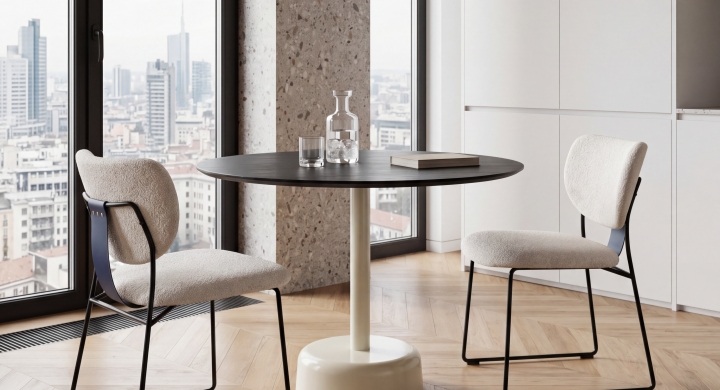
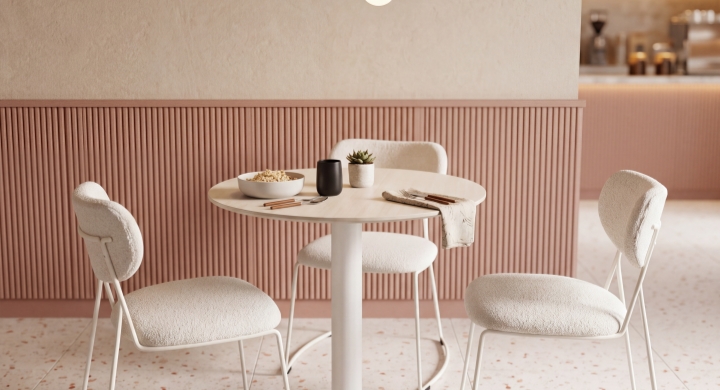
The logic is straightforward: post-pandemic travelers compare hotel rooms not to other hotels but to their own upgraded homes. Plush deep-seat lounge chairs, sculptural silhouettes, and layered textures including bouclé, velvet, and chenille now appear routinely in new builds and renovation specs. Industry design analysis identifies resimercial as a defining macro trend, specifically citing boucle upholstery, curved furniture forms, and matte wood finishes as the most-specified material choices.
The performance case supports the investment. Luxury and lifestyle hotel divisions that lean into this design language continue to post strong RevPAR (Revenue Per Available Room) and revenue growth. While multiple variables drive those figures, the lifestyle segment's consistent outperformance of midscale portfolios reflects sustained guest preference for residential warmth at commercial durability.
The specification challenge with resimercial pieces is the fabric requirement. Materials that read residential — bouclé, loose-weave linen, velvet — must be sourced in contract-grade construction. Minimum Martindale rub count: 30,000 for guestrooms, 50,000 and above for lobbies and F&B spaces. Designers who ignore this distinction often find themselves specifying replacements within eighteen months.
Trend 3: Has Biophilic Design Moved Beyond Decorative Plants Into the Furniture Itself?
In 2027, it has. Biophilic design — the integration of natural systems into built environments — is now a materials specification, not a decoration strategy.
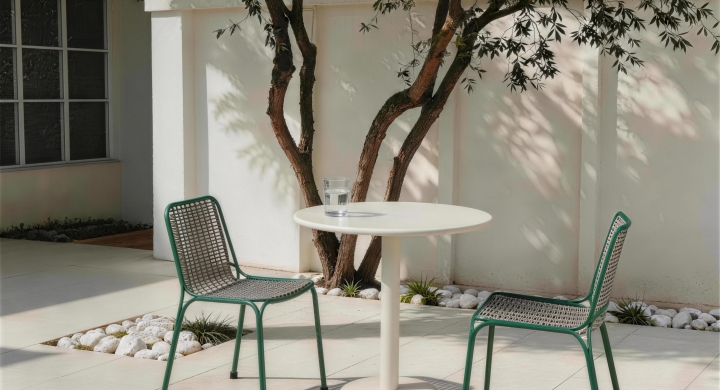
Stone-topped coffee tables, rattan accent chairs, bamboo storage units, and cork-faced cabinet panels appear regularly in top-tier hotel furniture schedules. Low-profile pieces that frame exterior views, rather than competing with them, are a direct functional response to wellness-driven travel demand.
That wellness connection carries measurable revenue implications. Hotels with major wellness offerings — environments that include biophilic design as a core component — generate significantly higher Total Revenue per Available Room (TRevPAR) than properties with no wellness facilities, according to global wellness real estate research. The takeaway for design teams is clear: biophilic elements are no longer decorative extras. They are part of the revenue story.
Trend 4: Why Are Hotels Specifying Modular Furniture Systems Now?
Because hotel spaces are increasingly expected to serve multiple functions within a single day — and fixed-layout furniture cannot support that operational requirement.
A lobby at 8 a.m. functions as a co-working environment: individual seating, power access, acoustic separation. By 7 p.m., the same footprint needs to operate as a cocktail lounge with conversation clusters. Tool-free modular seating systems and height-adjustable table configurations make that transition possible without a facilities team intervention.
This pattern is most visible in all-day-dining F&B spaces, extended-stay lobbies, and pre-function areas adjacent to meeting rooms. The specification requirement is a furniture system with standardized modular connectors, a consistent finish vocabulary across all configurations, and stackable or storable components that fit within standard housekeeping storage. Industry data reflects the shift: modular and smart furniture adoption in upscale hospitality projects has grown approximately 52% in recent years.
Trend 5: Is Sustainability Documentation Now a Baseline RFQ Requirement?
For most four-star-and-above procurement programs in 2027: yes.
FSC (Forest Stewardship Council) certification, low-VOC (volatile organic compound) finish systems, and recycled-content metal components are increasingly listed as minimum qualifications at the RFQ stage — not premium options. Design teams and procurement managers are requesting material origin documentation before shortlisting suppliers, including wood species sourcing region and finish chemistry composition.
This reflects the compliance requirements of major hotel brands pursuing LEED certification or internal sustainability frameworks. Properties that cannot demonstrate supply chain transparency from their FF&E contractors face qualification issues at the brand approval stage. In other words, sustainability documentation is no longer a differentiator. It is a gate.
Trend 6: What Does Tech-Integrated Furniture Actually Specify in 2027?
One word: hidden.
Wireless charging built into nightstand and desk surfaces is standard in upper-upscale new builds. USB-C integration in lobby seating and F&B furniture is common across the three-star-and-above segment. IoT-ready casegoods — units with managed cable channels and sensor-compatible console surfaces — are specified for rooms targeting the premium business traveler.
The design directive is consistent across all of these applications: technology must be functional and visually absent. Exposed cable management, visible charging pucks, or retrofitted USB strips are signs of a specification afterthought. Integrated tech furniture requires early-stage coordination between the furniture manufacturer and the property's AV and low-voltage consultant — not a late-stage retrofit. Teams that treat tech as an add-on usually pay for it later, either in guest complaints or in costly rework.
Trend 7: What Is a Statement Piece Strategy, and Which Properties Use It?
A statement piece strategy places one custom-produced, visually distinctive item per space as the brand's anchor: a sculptural headboard in a premium guestroom, an oversized live-edge communal table in a lobby, a compound-curve accent chair in a suite lounge.
The function is dual. The piece creates a socially shareable moment that amplifies organic marketing reach. It also anchors brand identity more effectively than a consistent-but-generic furniture program.
Execution requires manufacturing precision. Bookmatched veneer panels, compound curves, and large-format solid surface elements require CNC (computer numerical control) capability and skilled hand-finishing. A technically compromised statement piece is worse than no statement piece — it draws attention to the failure. This is one area where the gap between a capable manufacturer and an average one becomes immediately visible in the finished space.
The Common Thread Across All Seven Trends
These trends are not independent directions. They share a single specification logic: in 2027, hospitality furniture must deliver residential warmth at commercial durability. Specifying on aesthetics alone — without verifying Martindale ratings, FSC sourcing, modular compatibility, and tech integration pathways — produces early replacement cycles and unplanned capital expenditure.
Manufacturers who can respond to that complete specification set are the ones earning preferred-vendor status in this market cycle. RUDI FURNITURE has been supplying hospitality furniture to hotels, resorts, and branded properties for over 20 years, with FSC-certified sourcing, and CNC-plus-hand-finishing production.
RUDI FURNITURE Shines at the 2026 Pudong Furniture & Home Furnishing Twin Expo: A Resounding Success with Record-Breaking Attendance
Related Article