The Psychology of Cafe Seating: How Furniture Layout Boosts Customer Dwell Time
Let me start with a confession.
I've walked into cafes that felt like a warm hug, ordered a single espresso, and ended up staying for two hours.I've also walked into cafes that looked stunning on Instagram, ordered a latte, and left before it got cold.
The difference wasn't the coffee. It was the seating.
If you run a cafe, a coffee shop, or any hospitality space, you already know that dwell time matters. Longer stays usually mean more orders—a second drink, a pastry, maybe lunch. But here’s the tricky part: you can't force people to stay. You have to make them want to stay.
And that's where psychology meets furniture.
The "First 10 Seconds" Rule
When a guest walks through your door, they make a snap decision within the first 10 seconds. Not about the menu—about where they feel safe sitting.
We're wired as humans to look for:
-
Control – Can I see the room? Can I see the exit?
-
Comfort – Does this chair look like it will hurt my back after 20 minutes?
-
Social signal – Is this seat for "quick" people or "hangout" people?
This is why empty cafes feel awkward. Not because of silence—because there's no social proof telling new customers where to park.
So here's a simple trick: make your most visible seats (near the window or front counter) the most inviting ones. A cozy armchair, a small table with a plant, good lighting. When people see someone sitting there looking relaxed, they unconsciously think: "This is a place to stay."
Zone Your Floor Like a Pro (Without Making It Look Zoned)
The biggest mistake I see in cafe layouts? One-size-fits-all seating.
You buy 20 identical chairs, place them at 20 identical tables, and call it a day.
Here's the problem: your customers aren't identical.
You have:
-
The laptop warrior who needs power outlets and a flat surface
-
The bookworm who wants a nook away from the door
-
The quick coffee breaker who just wants a stool near the pickup counter
-
The catch-up friends who need a wider table for pastries and phones
-
The solo thinker who wants to face the window, not the crowd
If all your seats feel the same, none of these people feel really at home.
So what do we do? Zone it, softly.
The Energy Zone
Place high stools or communal tables near the order counter. This signals: "Fast, lively, grab-and-go." Good for the morning rush. Bad for lingering.
The Chill Zone
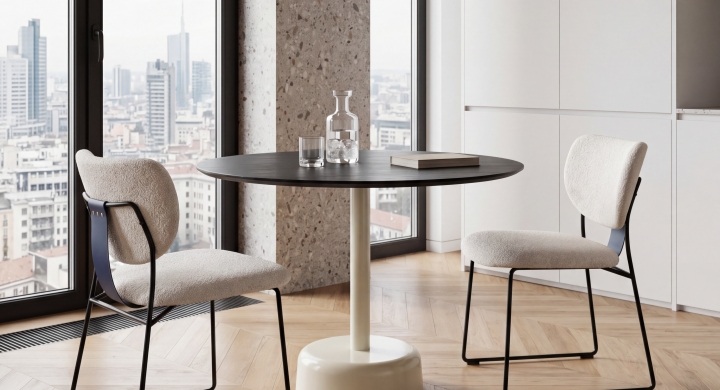
Push deeper into the space. Use low-back chairs, softer upholstery, maybe a sofa or banquette. This says: "You're off the clock. Take your time."
The Focus Zone
Along the wall or window, place small tables with single seats facing outward. No face-to-face pressure. Perfect for readers and remote workers.
The magic happens when you let customers self-select their zone. They feel smarter. They feel understood. And they stay longer because they're in the seat that actually fits their mood.
The Angle of the Chair Matters More Than You Think
This blew my mind when I first learned it.
Chairs that are squarely facing a table feel formal. Like a job interview. Or a meeting.
Chairs slightly angled (even 15 degrees) toward the room feel more relaxed. Why? Because they subtly invite the person to look around, breathe, and feel part of the space—not trapped in a face-off with the person across.
Here's my rule of thumb for cafes:
-
If you want quick turnover, keep chairs squared up. It unconsciously nudges people to finish and move on.
-
If you want longer stays, angle chairs slightly away from the table, or use benches and banquettes that encourage a loungy posture.
Same goes for booths. A banquette against the wall with a loose cushion makes people sink in and settle. That's your money seat.
The "Power Outlet" Tax
I'm going to say something that might annoy some designers, but it's true:
Without power outlets, your dwell time tanks.
Especially in 2026. People aren't just drinking coffee—they're working, scrolling, texting, video-calling. If they can't charge, they'll leave.
But here's the psychological trick: don't put outlets at every single table.
Why? Because when customers find that one perfect table with an outlet, they feel like they've scored. They guard that spot. They buy more just to "earn" the right to stay.
We've seen this data across hundreds of cafes: tables with accessible outlets generate 25–35% longer dwell time than those without. And they're more likely to turn into repeat visitors.
So invest in floor boxes, under-table power strips, or bench-side USB ports. It's not glamorous. But it works.
Moving vs. Stationary: The Silent Salesman
Here's a question most people never ask:
Should your furniture be easy to move?
There are two camps:
-
Camp Fixed – Heavy tables, bolted banquettes, everything in its place.
-
Camp Flexible – Light chairs, wheeled tables, rearrangeable.
In my experience, a hybrid wins.
Why? Because a completely fixed layout tells customers: "We've decided how you should sit." Some people rebel against that. They'll leave just because they don't like the feeling of being "assigned."
But a completely flexible layout feels chaotic. People don't know where to start.
So here's what we do: keep the perimeter fixed (banquettes, window counters, booths) and keep the center flexible (movable tables and chairs).
This way, couples can push two small tables together. A solo worker can pull a chair away from the crowd. Groups of four can rearrange without asking permission.
When people feel in control of their space, they relax. And relaxed people order another flat white.
The Color and Texture Trap
This one's easy to overthink, so I'll keep it simple.
Dark, heavy colors (deep brown, charcoal, navy) make a space feel intimate and cozy. They encourage longer stays—but only if you have good lighting. Without light, they feel like a basement.
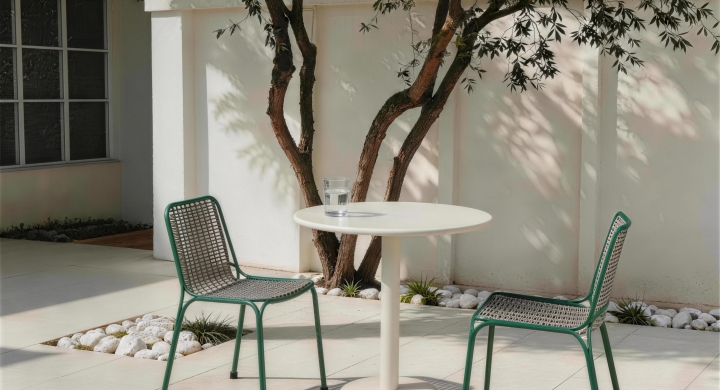
Light, bright colors (cream, pale wood, soft green) feel open and fresh. They encourage quicker visits in the morning and slower lounges in the afternoon—if you soften them with textured fabrics.
The real psychology trick is texture, not color.
People linger longer on:
-
Velvet or bouclé upholstery (it feels luxurious)
-
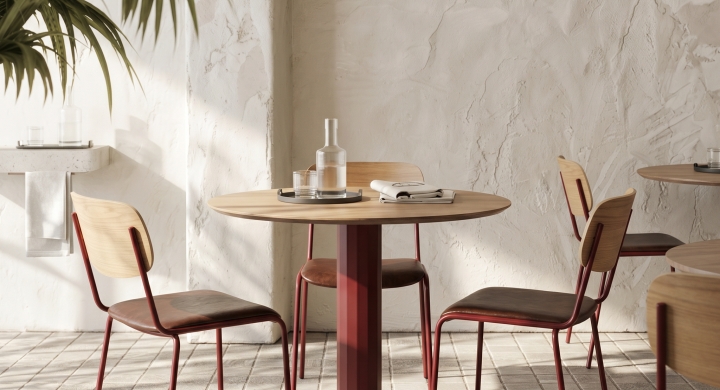
Natural wood with grain (it feels warm)
-
Rattan or cane (it feels relaxed, almost vacation-like)
Hard surfaces—metal, glossy laminate, smooth plastic—make people feel like they're in a fast-food chain. That's not bad for 10-minute turnover. But it's terrible for dwell time.
For a cafe that wants customers to stay, mix smooth and textured. A smooth wooden tabletop with a textured fabric chair. A concrete floor with a soft wool runner. The contrast keeps the eye interested and the body comfortable.
The "Bathroom Test" (Bear with Me)
I know this sounds unrelated. But stay with me.
I've visited over 200 cafes in the last five years, and I've noticed a pattern:
The cafes with the longest dwell times almost always have a clear, visible, well-designed bathroom.
Why? Because if a customer knows they can comfortably use the restroom, they're willing to order that second drink. If the bathroom is hidden, dirty, or awkward, people mentally check out. They finish their drink and leave.
So when you think about furniture layout, think about the full journey:
-
Entry → Order counter → Seating selection → Drink pickup → Bathroom access → Second order → Departure
Every step needs furniture that supports it—a counter for leaning, a place to set down a bag, a table that fits a laptop and a plate.
Dwell time isn't just about the chair. It's about the whole experience.
My Personal Rule for Cafe Owners
After all this psychology, here's the simplest advice I can give you:
Go sit in your own cafe for 90 minutes.
Not as the owner. As a customer.
Bring a book. Order a drink. Sit in every single seat you have.
-
Which seat made you feel most comfortable?
-
Which one made you want to leave?
-
Where did you feel like you could actually work or read?
-
Where did you feel watched or exposed?
Take notes. Move things around. Swap chairs between tables. Try it again next week.
The data from your own body will tell you more than any article—including this one.
Final Thought: Longer Stays Start with Listening
If there's one thing I want you to take away, it's this:
Furniture layout isn't about aesthetics first. It's about behavior.
Your chairs say something. Your tables say something. Your arrangement says stay or go before your barista even says hello.
So listen to what your layout is telling your customers.
And if it's telling them to leave—move a chair. Angle a table. Add a cushion. Put a lamp on that dark corner.
Sometimes, the smallest change creates the longest stay.
Have questions about your specific cafe layout? Feel free to reach out, or drop by RUDI FURNITURE's showroom to test some seating for yourself.
We're hitting the road this fall, and we'd love to see you there!
Catch us at:
Shanghai Furniture Fair – September
Autumn Canton Fair – October
Russian Furniture Expo – November
Let us know if you'll be around—we'd genuinely enjoy a face-to-face chat. Just shoot us a quick note, and who knows, we might just run into each other.
Summer Travel Dining Report 2026: Why Restaurant Furniture Matters More Than Ever
Unlocking the Creative Potential: Furniture with Metal Materials
Related Article